What Kind Of Hardwood Floor Damage Can Be Repaired in Virginia Beach?
Your floors take a beating in a coastal city like Virginia Beach, VA. If you are weighing hardwood floor repair, the good news is that many common issues can be fixed without replacing your whole floor. Below, our team at Conley's Hardwood Floor Refinishing explains what can and cannot be repaired, how local climate plays a role, and what to expect when you call a refinishing specialist.
What We Can Usually Repair In Virginia Beach, VA Homes
Hardwood is one of the most forgiving surfaces in a house. In many cases, a skilled refinishing crew can restore affected areas so they blend with the surrounding floor. Common repairable problems include the following:
- Light to moderate scratches and scuffs from shoes, pet nails, and sand tracked in from Chic's Beach or the Oceanfront boardwalk.
- Isolated dents and small gouges from dropped pans or furniture feet.
- Minor gaps between boards caused by seasonal dryness, when they are not structural or subfloor related.
- Cupping from humidity swings when boards have stabilized, and the wood is still sound.
- Localized water marks from a brief spill or a small leak that was caught early.
- Pet stains that have not penetrated deeply through the wear layer.
- Squeaks tied to loose fasteners or minor subfloor movement in a focused area.
- Sun fading near large windows in the North End or Great Neck after years of coastal light exposure.
Most of these issues respond well to targeted board repairs and professional refinishing. Spot repairs are planned so the sheen and color match the rest of the room, which keeps the eye from catching on a patchy area.
Damage That Often Needs Board Replacement
Some damage goes beyond what sanding and finish can correct. When boards are too far gone, replacing the damaged planks is the better route. Situations that often call for new boards include:
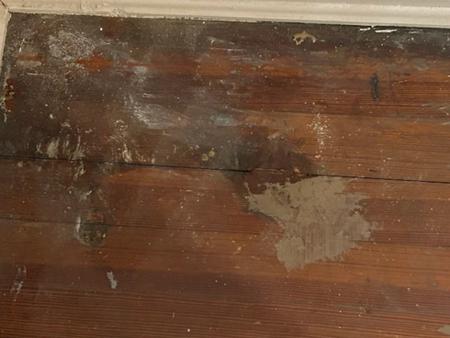
- Severe water damage from long, unnoticed leaks or storm intrusion where the wood has swelled, buckled, or delaminated.
- Black staining from moisture that has reacted with the wood tannins across multiple boards.
- Deep pet urine contamination that soaked through the wear layer and into the tongue and groove.
- Cracked or split boards that move underfoot and cannot be stabilized.
- Termite or pest damage where the wood has been weakened.
Water trapped under flooring can lead to mold and subfloor problems if not addressed quickly. In those cases, sections are removed, the subfloor is inspected and dried, and matching species are woven in before refinishing brings the surface back together.
How Local Climate Affects Hardwood Floor Repair In Virginia Beach
Virginia Beach summers are humid, and coastal air carries moisture and salt. Winter can be dry indoors when heating runs. These swings move wood. That is why cupping, small gaps, and seasonal squeaks are common service calls from Hilltop to Red Mill.
Humidity swings are the number one cause of cupping in our area. Before repairs, a professional checks moisture levels in boards and the subfloor. Work is timed so the wood is near its normal living condition. In a typical home, that means indoor relative humidity that is neither peak summer high nor mid-winter low. Stabilized conditions help repairs last and help color correction blend evenly.
Repair Or Refinish: How A Refinishing Pro Decides
Conley's Hardwood Floor Refinishing is a Virginia Beach hardwood floor refinishing specialist, so the first question we answer is whether a spot repair will disappear once the whole room is sanded and finished. Here is the general thinking behind the recommendation:
If problems are scattered but shallow, a full refinishing of the room levels wear and erases most surface marks. If damage is more serious but isolated, we replace those boards first, then refinish for a uniform look. When only a corner or a doorway is affected, and the floor has plenty of life left, a carefully blended repair can save you from sanding the entire room.
Color matching matters most on mid-toned floors where small shifts are obvious to the eye. A pro tests stains and finishes on scrap pieces or in an inconspicuous spot so repaired areas fade into the background under normal light.
Engineered vs. Solid Hardwood: What Can Be Repaired
Virginia Beach homes feature both solid and engineered hardwood. Each responds differently to repair. Solid hardwood has a thick wear layer that can be sanded multiple times. It handles deeper scratch removal and board replacements with ease when species and width are matched. Engineered hardwood has a thin wear layer over a stable core. It can often be repaired, but there is less room for sanding, and certain bevels or textures are meant to stay intact.
Never assume an engineered floor can be heavily sanded without checking its wear layer first. A technician will measure the remaining thickness and plan the approach to protect the factory profile while improving the look.
Neighborhood Notes Around Virginia Beach
Each part of the city has small details that change how we evaluate repairs. Homes near the Chesapeake Bay and the Oceanfront may see more sand abrasion by entryways. Houses in Princess Anne or Little Neck often have large windows that create sun fade lines on older finishes. Older cottages in the North End might have tighter rooms that make board weaving and pattern matching important. Newer builds in Red Mill or Salem may have engineered floors that require a careful touch to keep micro-bevels consistent from board to board.
Coastal humidity in Virginia Beach can swing quickly after summer storms. Scheduling repairs when indoor conditions are stable helps your finish cure properly and blend better with adjacent rooms.
What A Professional Looks For During Assessment
Before any repair begins, a pro will inspect the problem area and the surrounding rooms. They are looking for clues that show cause and scope:
Moisture checks tell us if the wood is ready for work. We examine grain direction and board pattern so replacements blend. We confirm the species and grade, whether that is oak in a Kempsville ranch or maple in a new build off Holland Road. Adhesive residue, previous finish type, and traffic patterns are also noted. The goal is a plan that fixes the root issue and finishes with a seamless look under natural light and lamps at night.
Squeaks, Movement, And Subfloor Considerations
Squeaks are often a sign of fasteners slipping or wood rubbing as humidity shifts. Many times these can be quieted during a repair with better fastening and minor subfloor attention in the affected spot. If subfloor irregularities are widespread, broader work may be recommended before refinishing so the new finish does not highlight dips and ridges.
Small areas of movement can grow if ignored, especially in high-traffic hallways and near exterior doors. Addressing them early protects the surrounding boards and prevents finish wear from accelerating around the trouble spot.
When Repairs May Not Be The Right Choice
Sometimes the best answer is to step back and think bigger than a spot fix. If water sat on the floor for days during a summer storm and boards across a room became heavily cupped or buckled, targeted repair might leave you with a patchwork look. If pet stains darkened large sections, color variation after sanding can still show through. If there is widespread structural movement underfoot, repairing only the visible damage will not stop the noise or the gaps from returning.
In these cases, the recommendation may be to replace affected sections and then refinish the entire room or floor for a uniform result. It preserves the investment while giving you a consistent color, gloss, and feel from wall to wall.
Common Questions Homeowners Ask About Repair Outcomes
Will I still see the repair? In well-matched species with a thoughtful stain and sheen choice, most people cannot find the repair once the finish cures. How long does it take? Timelines vary by home and season because curing depends on temperature and humidity. What about color in sun-faded rooms? A complete refinishing after board replacement lets us reset the whole room to a new tone so you do not notice where the sun used to hit.
What if my dog keeps scratching? Hardwood holds up well to daily life, though heavy claws and sand will mark any finish over time. Floor protectors on chair legs, doormats at entryways, and simple cleaning routines keep repaired areas looking new longer without changing how you live.
Species, Sheen, And Light: Why Blending Matters
Oak hides wear differently than maple or hickory. Satin and matte sheens soften reflections and help repairs disappear in bright rooms, which is helpful in sunny spaces around Great Neck. Semi-gloss reflects more, which can emphasize minor texture differences between old and new boards. Light placement matters too. A long window that throws light across the grain can make even tiny surface dents look bigger, so we plan finishing steps with the room's light map in mind.
The Big Picture: Protecting Your Floors In A Coastal City
Life near the water is worth it, even if it brings a little extra care for your floors. Sand at the threshold, salty air, and bounce from lively gatherings all leave marks over time. The upside is that hardwood can be renewed again and again by the right hands. Repairing only what is needed and refinishing at the right moments stretches the life of your floor while keeping your home fresh and inviting.
Whether you live near the Oceanfront, in Lynnhaven, or out toward Sandbridge, a balanced plan is the secret. Targeted repairs when damage is small, full-room refinishing when wear is even, and board replacement only where necessary. That approach keeps your home looking great without overdoing the work.
How Conley's Hardwood Floor Refinishing Approaches Hardwood Floor Repair
When you reach out, our refinishing team listens to your goals and studies how your floor behaves through the seasons. We look for the simplest fix that will still hold up to daily life. If a few boards are the problem, we weave new ones in and blend the color. If surface wear is the story, we refinish the room so everything matches from threshold to baseboard. If moisture left a bigger mark, we guide you through board replacement and finishing so the repair looks original to the home.
Communication is key. We explain the options in plain language and keep the plan focused on what you care about most, whether that is keeping a historic look in an older cottage or brightening a family space in a newer home.
Ready To See What Can Be Repaired?
If your floor has scratches, small gaps, cupping, or a stained patch, chances are good it can be fixed. If the damage is heavier, targeted board replacement plus refinishing brings a room back to life without starting over. Either way, you do not have to guess. A short, on-site evaluation lets you know what is realistic before you make a decision.
Call Conley's Hardwood Floor Refinishing at 757-289-5800 to schedule an assessment. We help homeowners across Virginia Beach, VA make smart choices that fit the home, the season, and the way you live.
Call Us
Connect With Us
Leave a Review

Ready to Love Your Hardwood Floors Again?
Contact Our Hardwood Floor Refinishing Services Today!